











Le Big Smelt

BABA AGM, National School of Blacksmithing, Holme Lacy, Herefordshire 2004
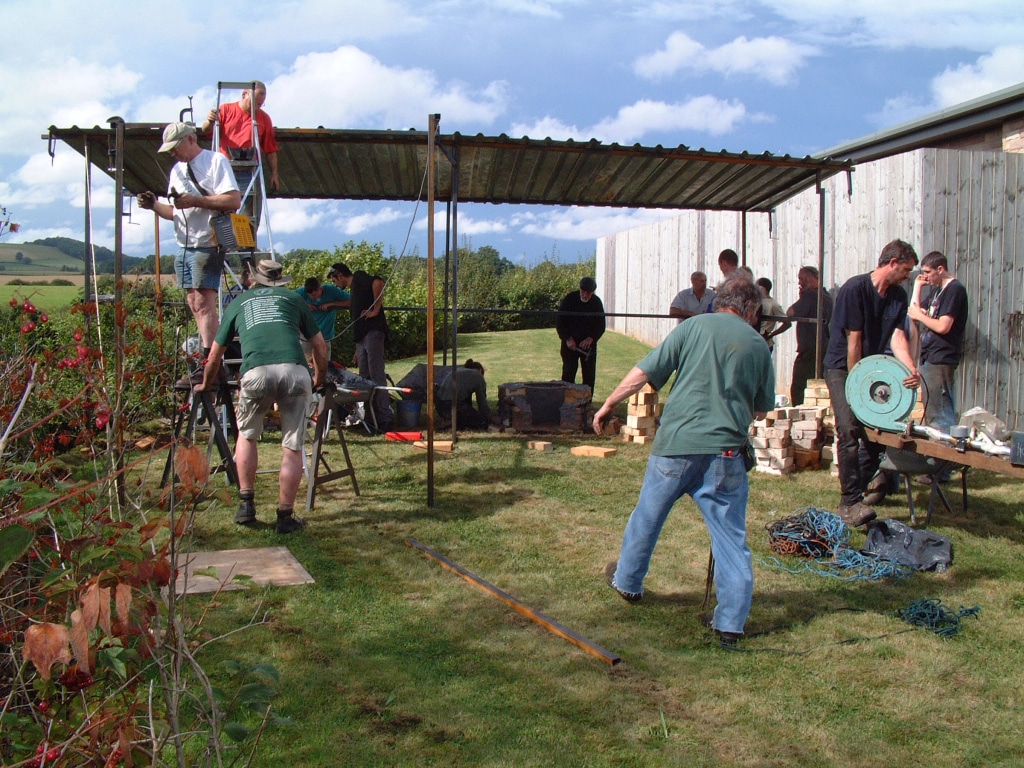
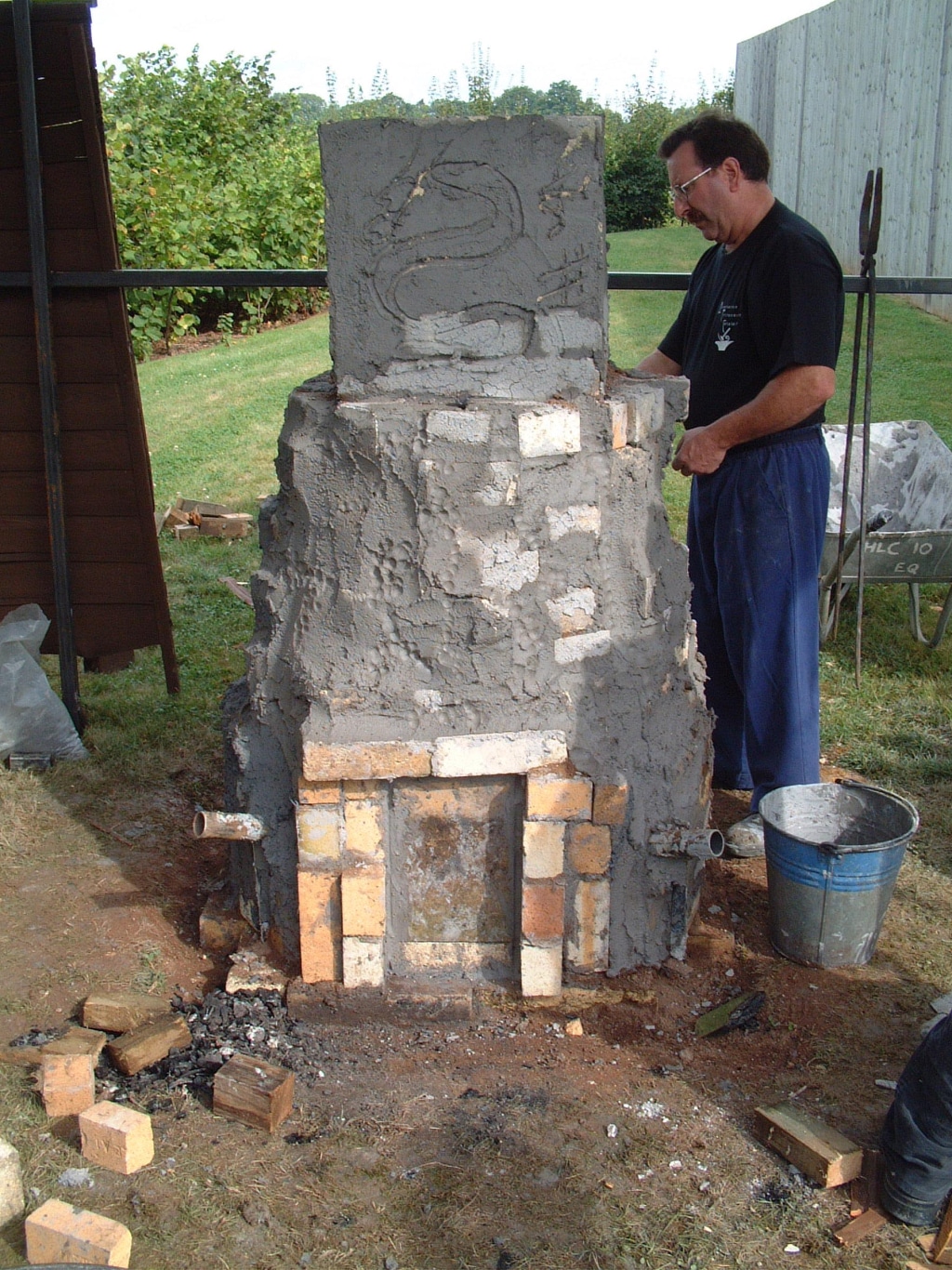
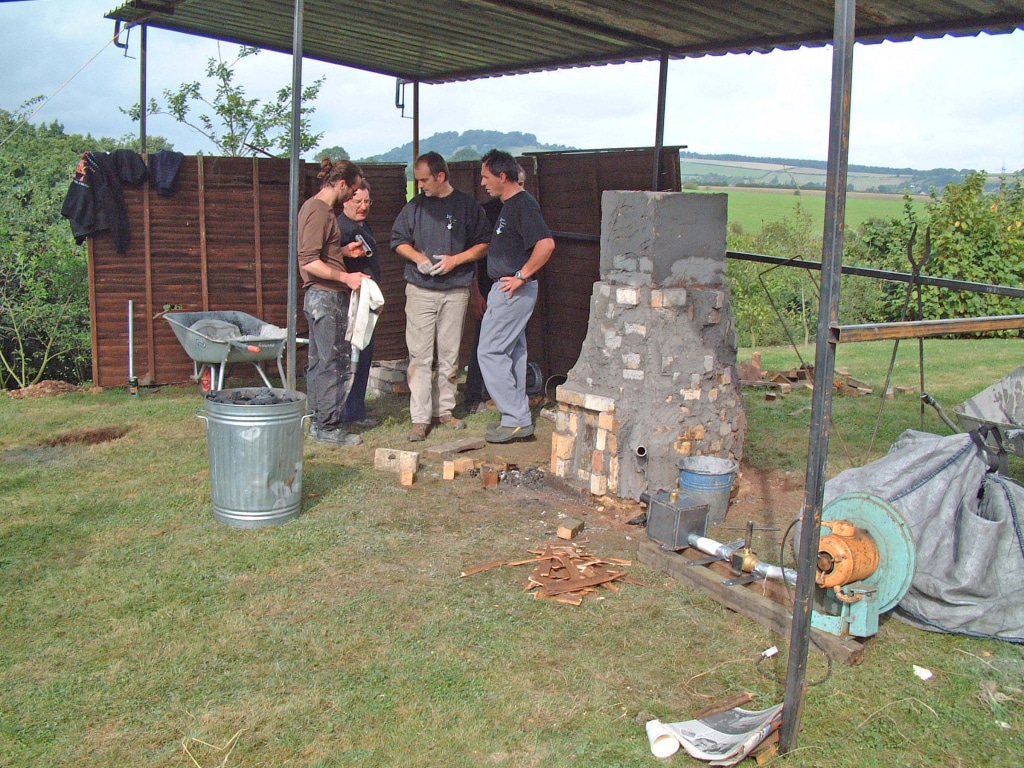
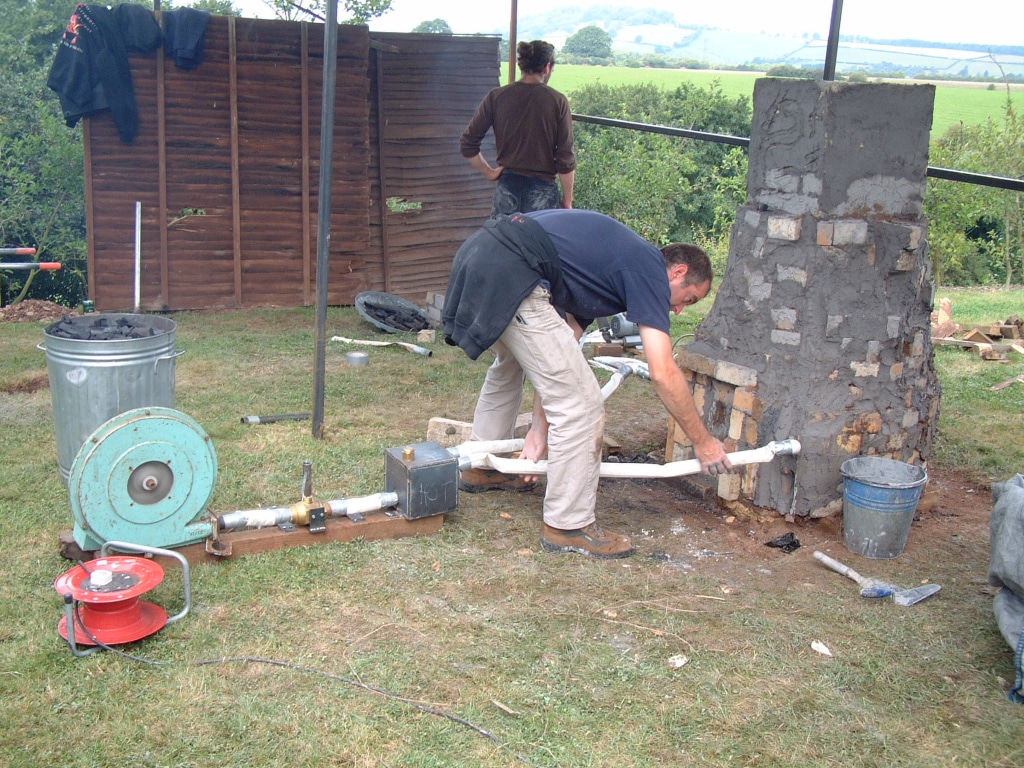
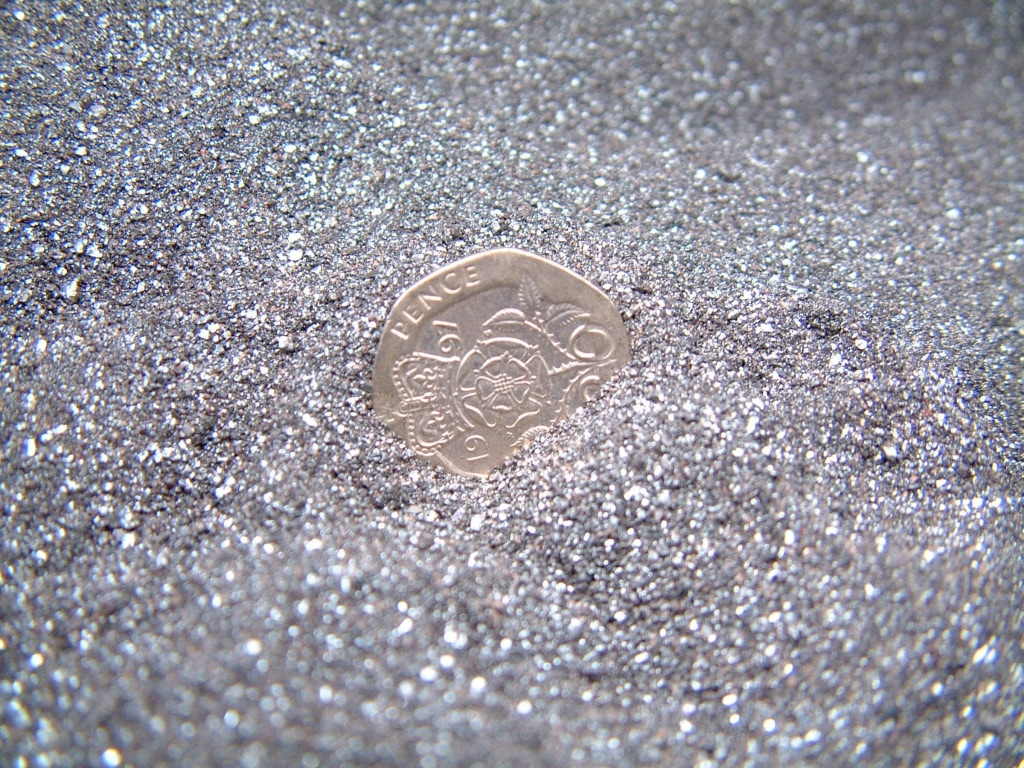
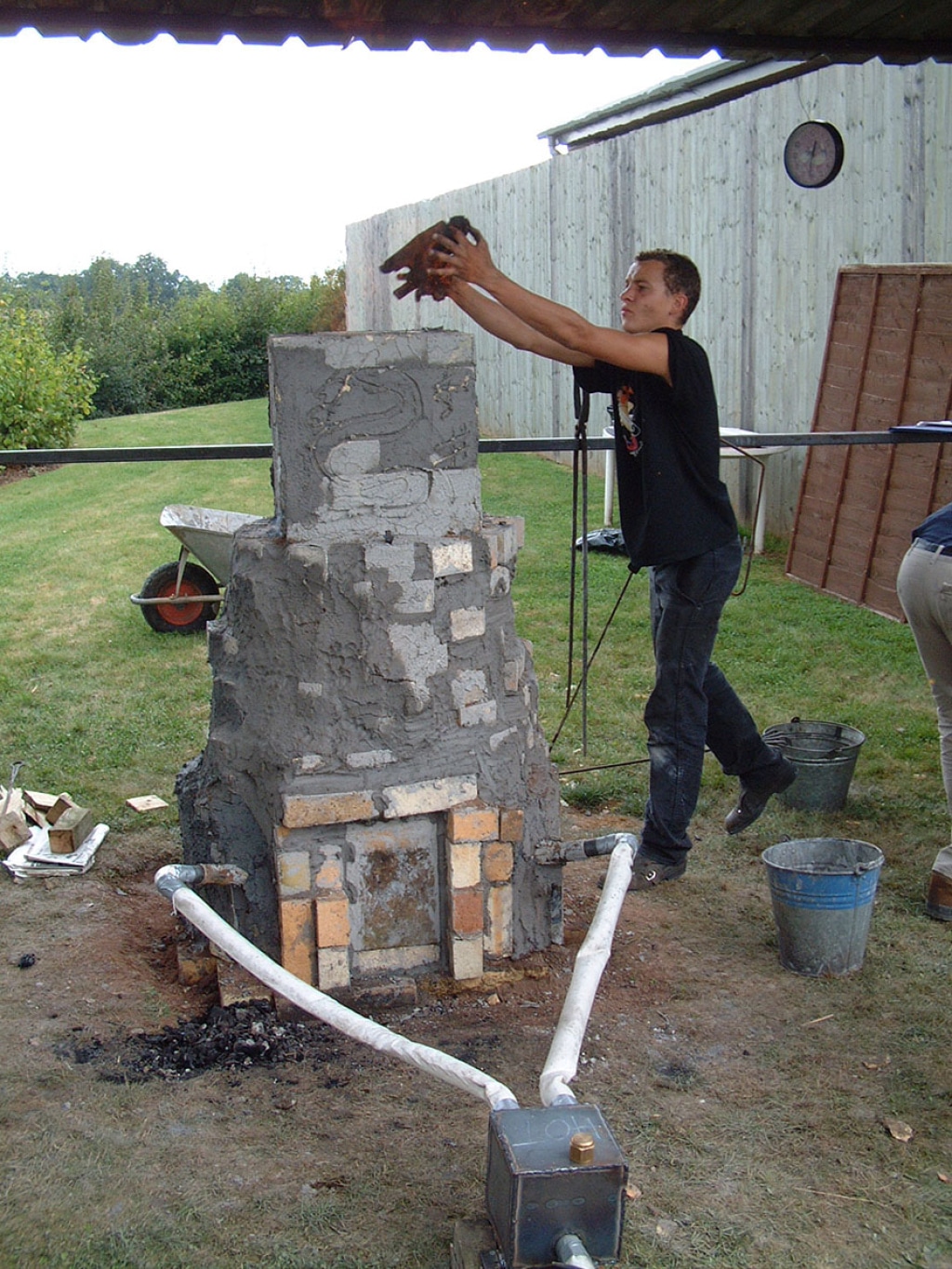
Who would have thought that if you pile up some bricks, mud and half burnt sticks, set fire to it, blow in some air, and sprinkle on some shimmering rock dust, after 2 hours, out comes lump upon which the whole of recent civilisation is based. Wow! Such was the awe and wonder that attended the magical transformation of hematite into iron through the action of charcoal in a low furnace throughout the weekend of the 2004 AGM.
Everyone knows that huge crucibles of steel are smelted, poured out, rolled and shaped into the stuff that arrives on the back of the lorry for us to forge, but I would certainly not have guessed it was possible to make the same stuff so successfully from scratch on a patch of grass at Holme Lacy over the space of a weekend!
A similarly amazing fact was that 170+ people from around the world had gathered to see it. There were smiths from Tanzania, South Africa, France (the smelting team), America and Australia - not to mention those from other parts of the world who I didn't bump into. As well as the far-flung folk there were also many, many new members from all around the UK who had not been to a forge-in before but were tempted out, getting stuck in to the forging competition and making full use of the unrivalled facilities on offer at the HCT Rural Craft Centre.
Other helpers worthy of praise were the charcoal choppers who got very very dirty scraping the bark off the four, tonne-bags of charcoal and grading the pieces into five separate sizes for the smelt. The different charcoal grades were necessary for the various parts of the process—small sizes or fire welding and second reduction, medium sizes for the beginning of the smelt and the largest sizes for the two-hour long burn for the reduction phase.
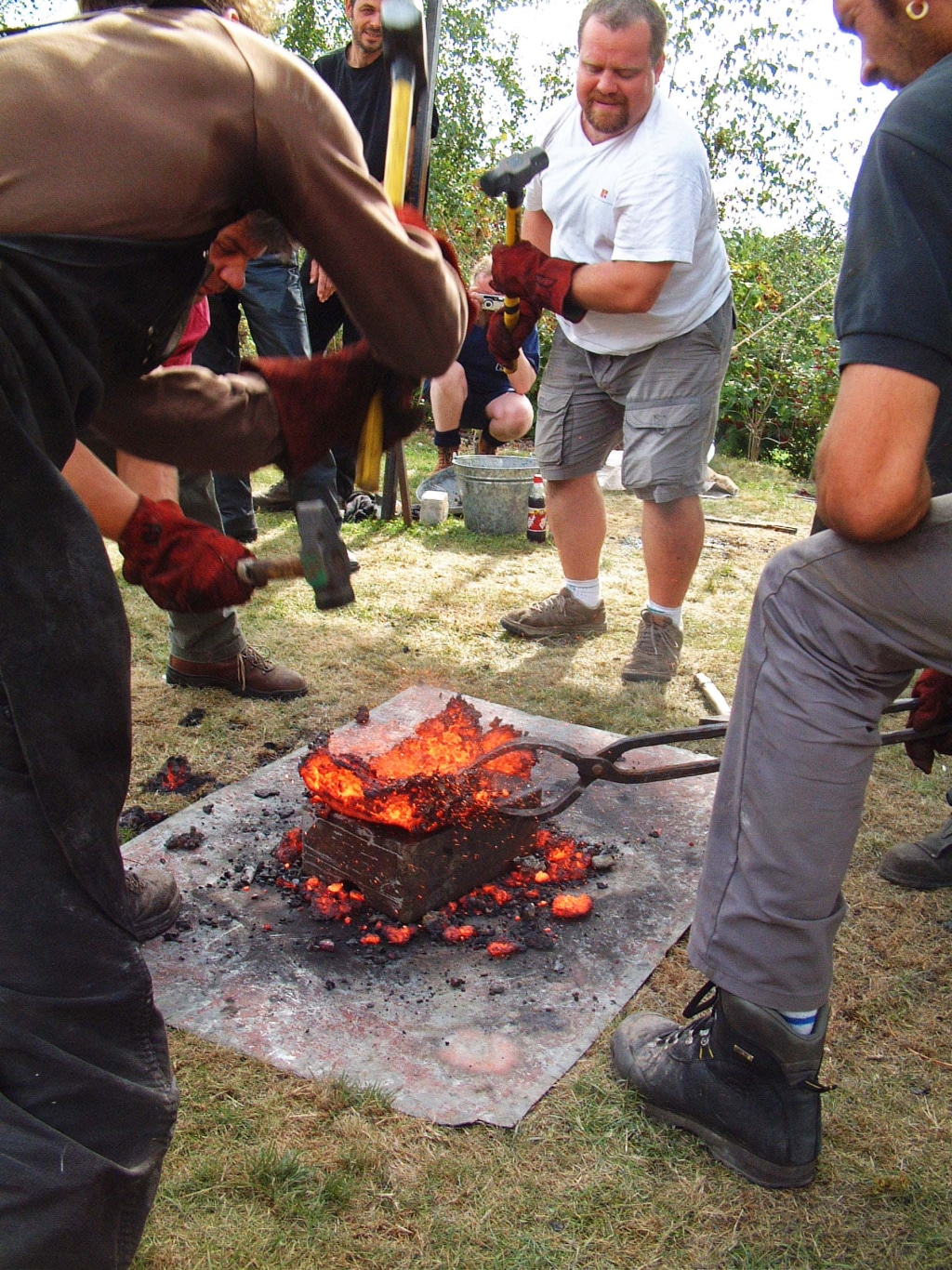
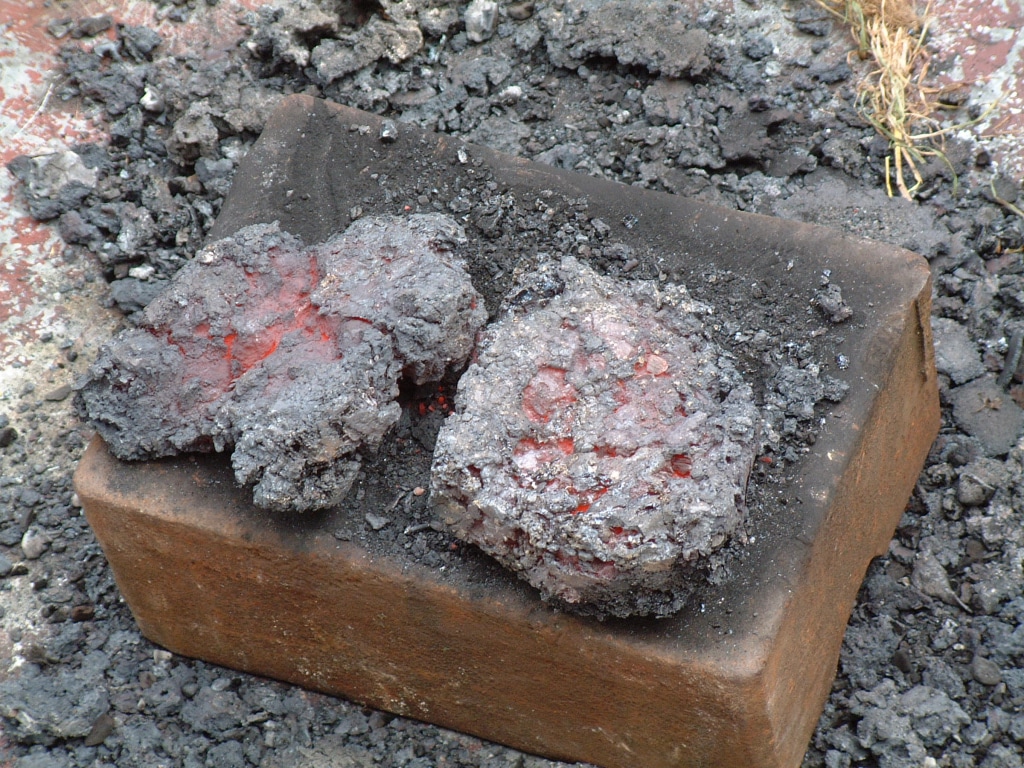
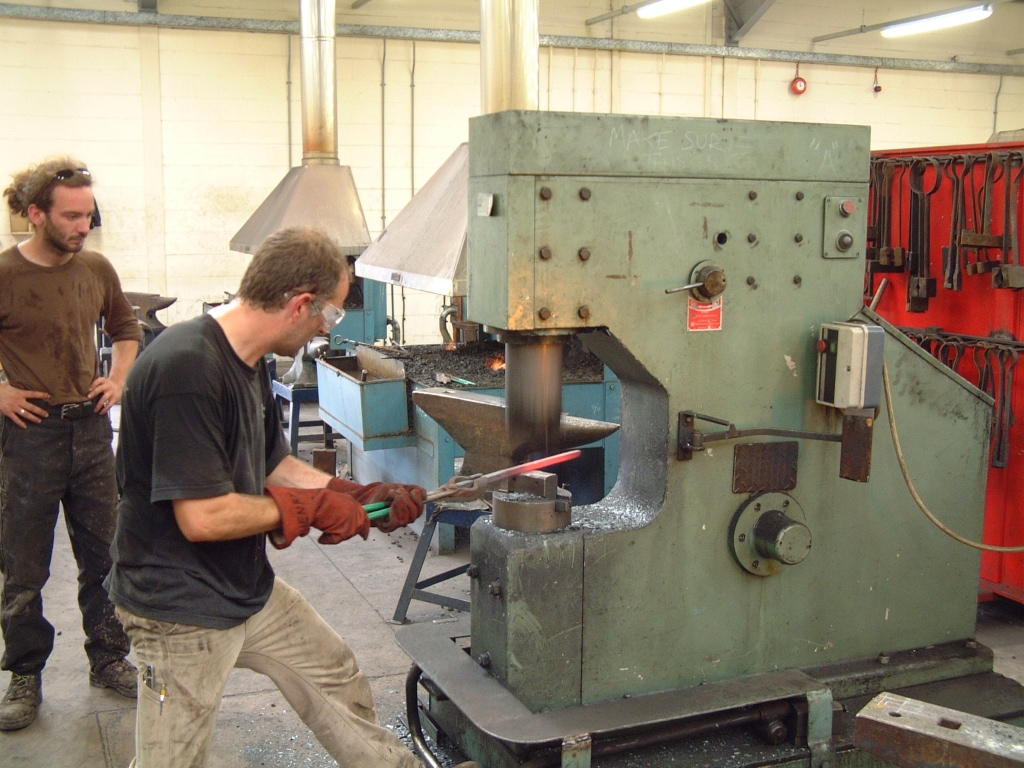
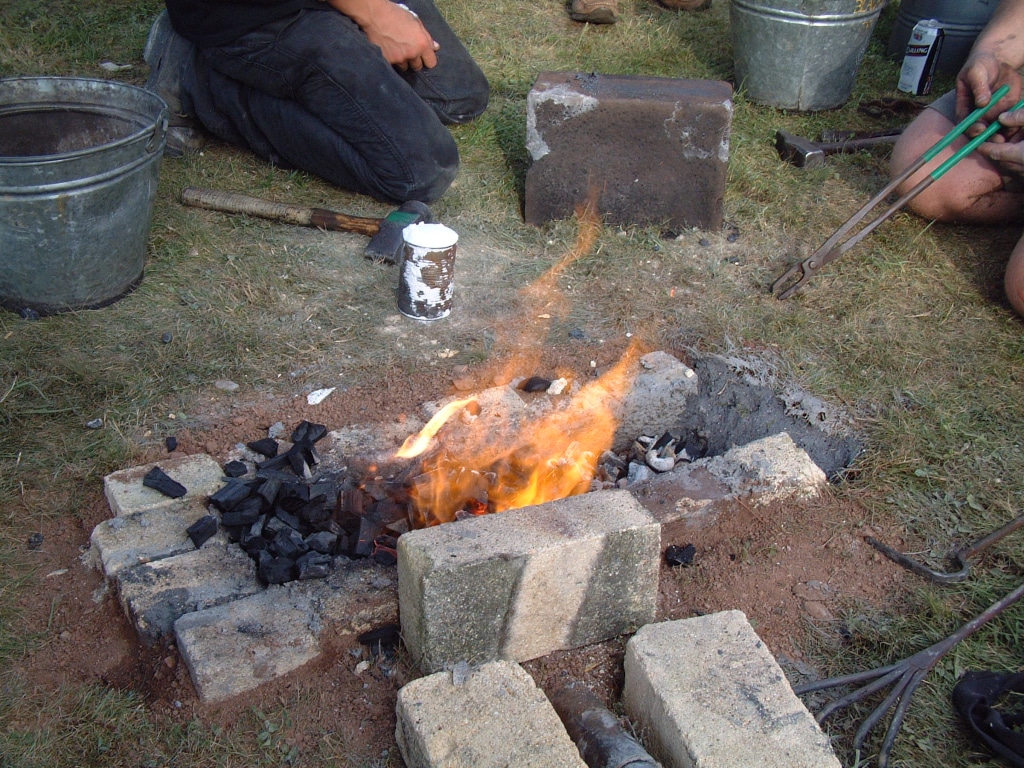
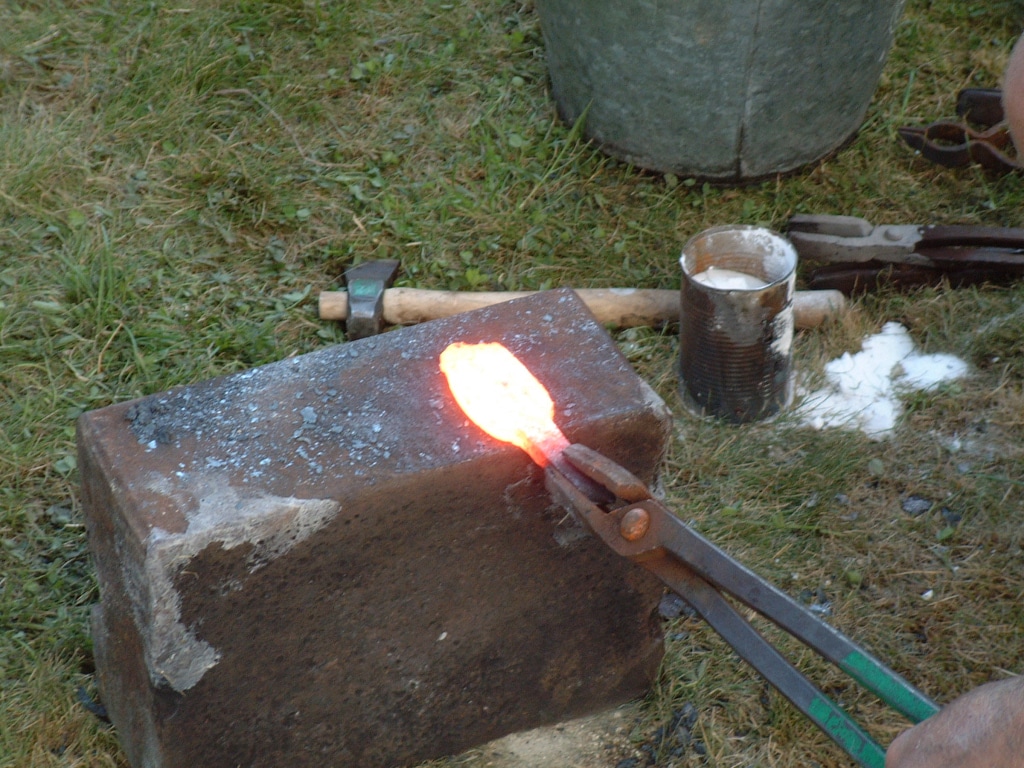
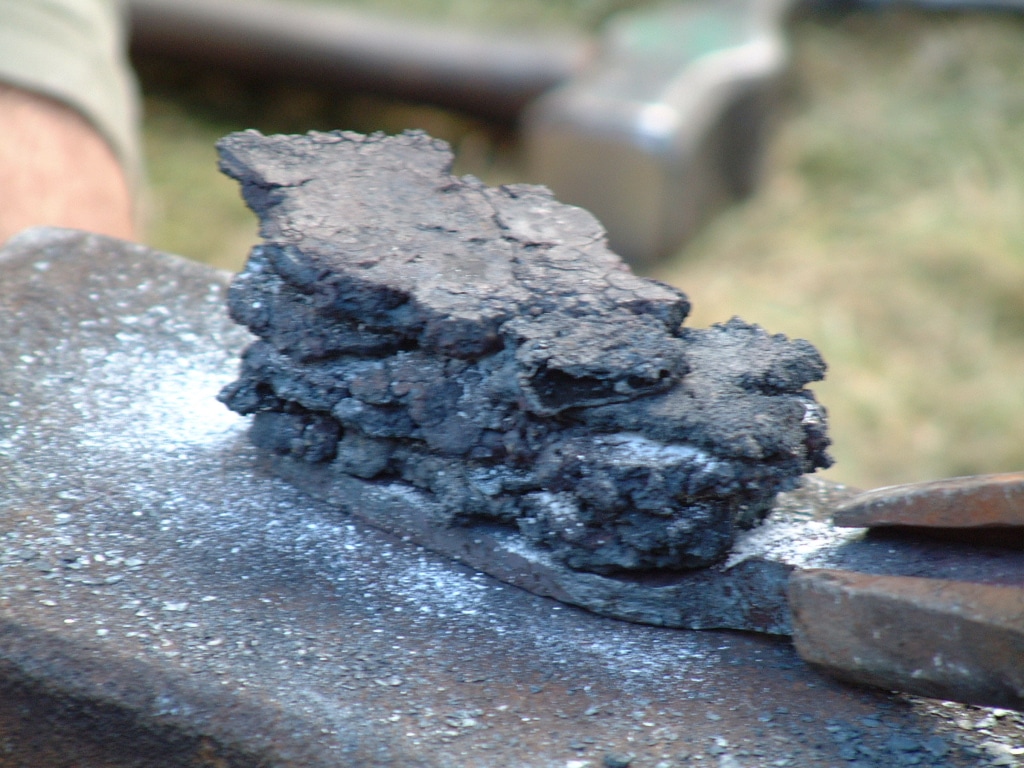
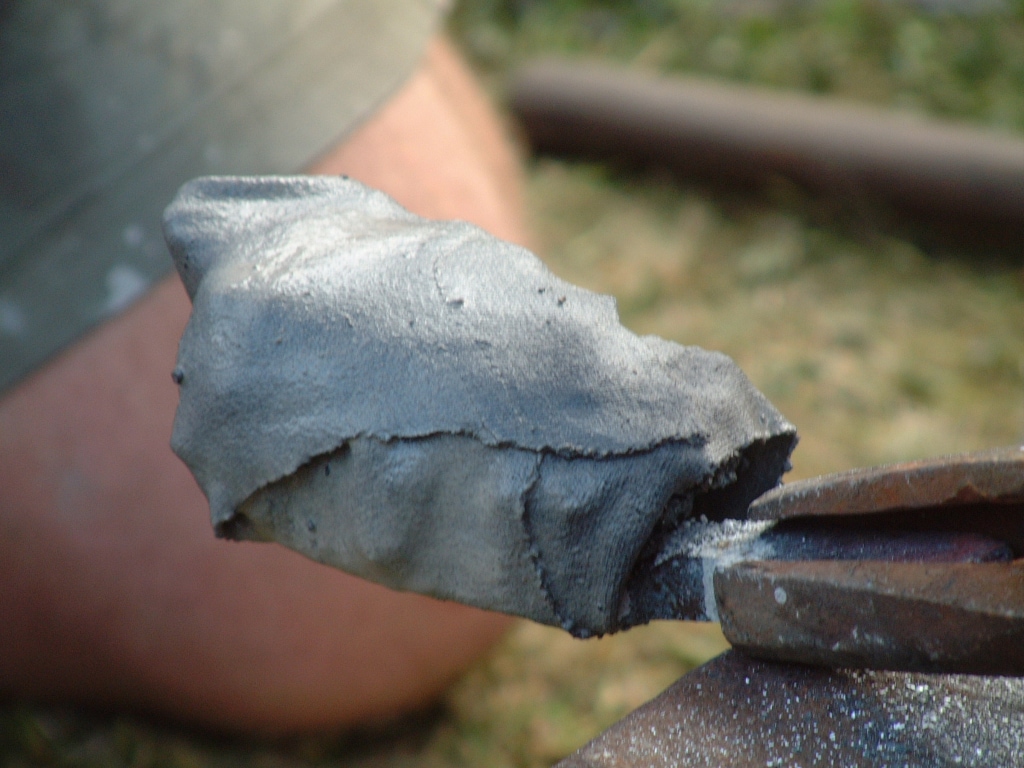
For the uninitiated, the basic process of low furnace smelting goes as follows (as described to me by Jean-Michel and Stefan running the smelt): After building your furnace light a fire in the bottom and stoke it up. Add your finely-ground iron ore. As the charcoal burns down, the ore travels through the reducing layer of the fire (where the oxygen is robbed from the iron ore to keep the fire burning, leaving pure iron) eventually coming to rest at the bottom of the furnace and forming the bloom to be forged into workable lengths. The ore that is not wholly reduced (remaining as iron oxide) is collected and passed through a smaller fire for the 'second reduction'. The smaller pieces of iron/steel that break off from, or are not part of, the bloom are firewelded to a usable length of stock in a six-layered, jigsaw-like combination with borax, all wrapped up in a swathe of material drenched in fire-clay slip. The results of the weekend's three smelts were almost 30kg of soft iron, a wealth of knowledge and expertise passed on to those present and three furnaces set up and ready for us to use at the college. Not bad for 3 day's work!